Get to Know NO—
When you hear “nitric oxide,” you might think of nitrous oxide—better known as laughing gas. While nitrous oxide has its uses in dentistry, nitric oxide is quite different. Maintaining healthy levels of nitric oxide in the body is no laughing matter—and here’s why.
In 1998, Doctors Robert Furchgott, Louis Ignarro, and Ferid Murad won the Nobel Prize in Medicine for discovering the importance of nitric oxide as a signaling molecule in the cardiovascular system. Since then, nitric oxide has been extensively studied and is considered by many scientists to be one of the most vital molecules in the human body, playing a key role in nerve signaling and cellular communication.
Heart Disease on the Rise Around the World
According to the World Heart Federation, deaths due to cardiovascular disease have increased by 60% globally over the past 30 years. The World Health Organization estimates that 1.28 billion adults over age 30 suffer from hypertension (high blood pressure), with only 21% keeping it under control.
Nearly half of men and women in the U.S. have hypertension—and many are unaware of it. What’s often overlooked is that heart disease is frequently a problem of the arteries, not just the heart itself.
High blood pressure occurs when the force of blood against artery walls remains consistently too high. Over time, uncontrolled blood pressure, high lipids, and plaque buildup can stiffen arteries, forcing the heart to work harder and increasing the risk of serious cardiovascular conditions.
What Does Nitric Oxide Do in the Body?
Nitric oxide is best known for supporting healthy blood pressure, but its benefits extend across multiple systems of the body:
- Cardiovascular – Signals vasodilation (artery relaxation), improving blood flow, oxygen delivery, and blood pressure modulation.
- Pulmonary – Acts as a bronchodilator, enhancing oxygen exchange and lung function.
- Immune – Inhibits viral replication, helping the immune system combat pathogens and infections.
- Cognitive – Nitrate-rich diets have been shown to boost blood flow to the brain’s frontal lobe, aiding in memory and cognitive protection.
- Endocrine – Improves insulin sensitivity and supports hormone balance across various systems.
How Do You Get Nitric Oxide?
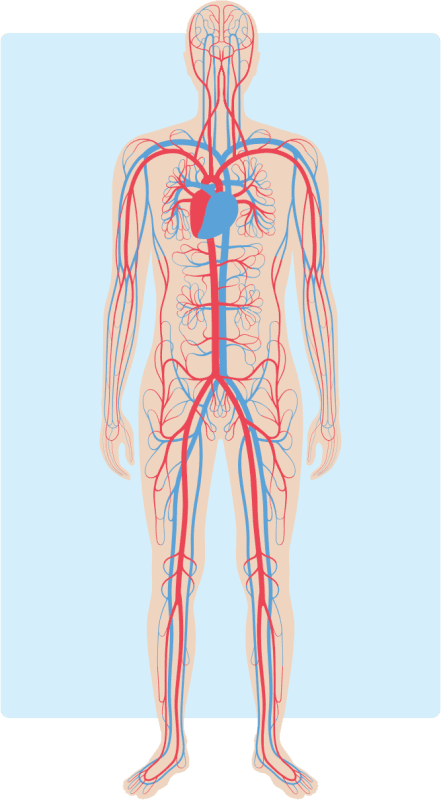
The good news is that our bodies naturally produce nitric oxide. Deep nasal breathing activates nitric oxide production in the sinuses, delivering it to the lungs. Additionally, nitric oxide is produced in the endothelial cells that line all 60,000 miles of blood vessels in the body.
The bad news? Nitric oxide production declines significantly with age. By age 40, we generate about half of what we did in our twenties. By 50, it drops to roughly 35%, and by 60, only about 15% remains—contributing to fatigue, cognitive decline, and elevated blood pressure.

Because nitric oxide cannot be directly consumed, it’s important to eat nitrate-rich foods and antioxidants that support its production. The amino acids L-arginine and L-citrulline also play key roles in nitric oxide synthesis—these are commonly found in red meat, fish, dairy, legumes, and beets.
A Scientific Solution for Low NO
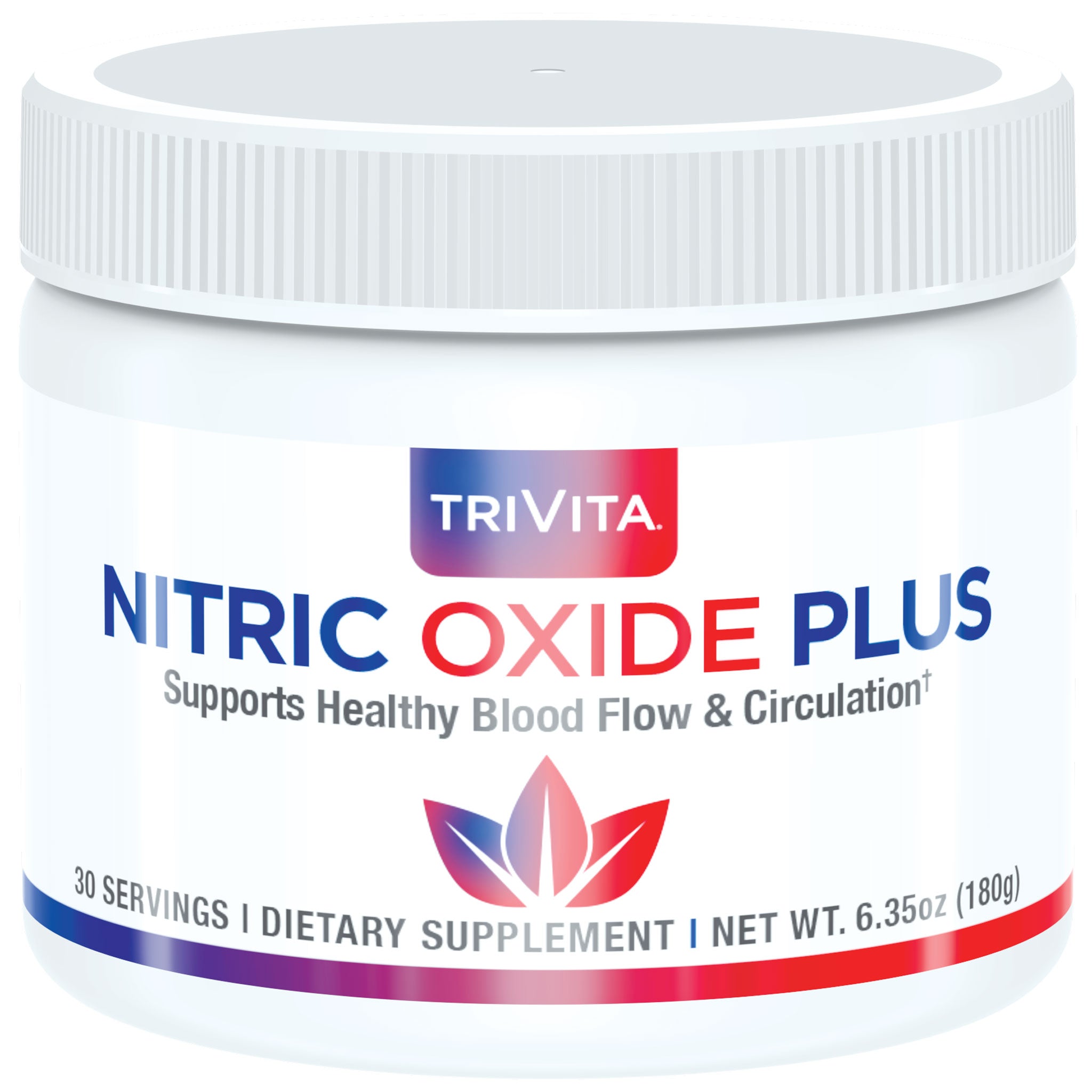
For those with dietary restrictions or limited nitrate intake, supplementing with TriVita’s Nitric Oxide Plus is an excellent way to support nitric oxide production naturally.
Each serving contains 2,000 mg of beet root powder, combined with horse chestnut, L-arginine, and L-citrulline. This synergistic formula is scientifically balanced to help support blood flow, energy, and healthy circulation.
References
- 1. Nobel Prize in Physiology or Medicine, 1998
- 2. World Heart Federation – Global Cardiovascular Disease Report
- 3. WHO – Hypertension Factsheet
- 4. CDC – High Blood Pressure Facts
- 5. TriVita – The Sky Is the Limit
- 6. Nitric Oxide and Health Study, NCBI
- 7. NCBI – Nitric Oxide in Physiology
- 8. NCBI – Nitric Oxide and Vascular Function
- 9. NCBI – Nitric Oxide and Exercise
- 10. PubMed – Nasal Breathing and Nitric Oxide Production